
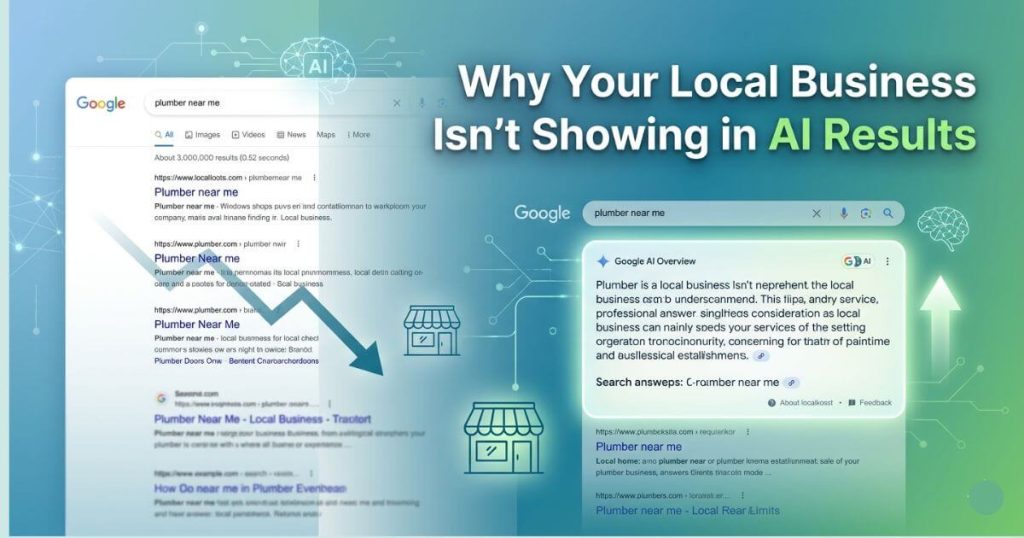
Why Your Local Business Isn’t Showing in AI Results
Have you noticed something strange lately?
Your website used to rank on Google…
But now, a big AI-generated answer appears at the top instead.
👉 The result?
- Your visibility is dropping
- Click-through rates (CTR) are decreasing
- Competitors are getting featured instead of you
This is the new reality of search.
I’m Nurul Reach, an SEO Problem Solver & Local SEO Expert—and here’s the truth:
Modern SEO is no longer just about rankings.
👉 It’s about:
- AI visibility
- Entity authority
- Answer relevance
If your business appears in Google AI Overviews:
- You instantly build trust
- You get more qualified leads
- You dominate your local market
In this guide, I’ll show you exactly how to rank in AI Overviews step by step.
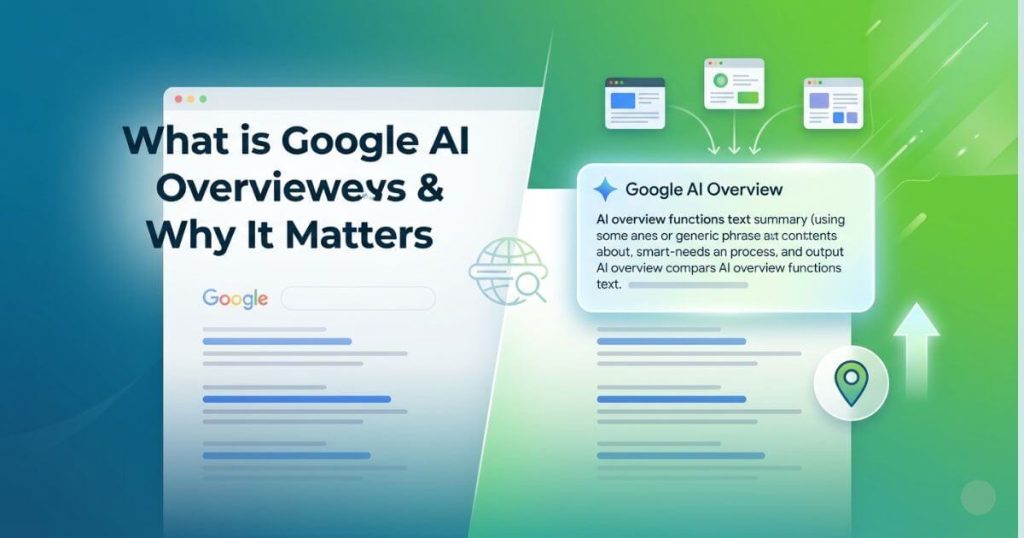
What is Google AI Overviews & Why It Matters?
Google AI Overviews is an AI-powered search feature that generates summarized answers directly on the search results page.
Google AI Overviews provide quick, AI-generated summaries by combining information from multiple sources, helping users get instant answers without clicking multiple websites.
Why It’s Critical for Local Businesses
- Zero-click searches are increasing
- AI prioritizes trusted sources
- Local intent queries often trigger AI summaries
👉 Example:
Search: “Best electrician near me”
AI Overview: Shows top recommendations instantly
How Does Google AI Choose Content?
Google doesn’t randomly pick content—it selects based on quality, relevance, and trust.
✅ 1. Entity Authority
Entity-Based SEO plays a major role.
Google evaluates:
- Who is the brand?
- Is the website authoritative?
- Does it show topic expertise?
✅ 2. Context & Semantic Relevance
Natural Language Processing helps Google understand:
- Context of your content
- Intent behind user queries
- Depth of information
✅ 3. EEAT Signals
Google values:
- Experience
- Expertise
- Authority
- Trust
For local businesses, this includes:
- Reviews
- Real-world experience
- Local relevance
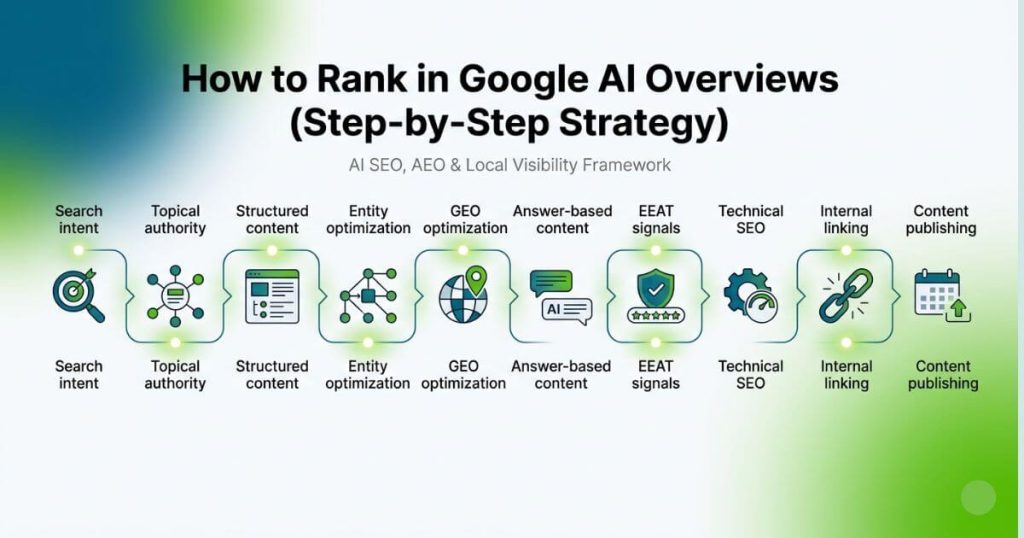
How to Rank in Google AI Overviews (Step-by-Step Strategy)
1. Match Search Intent First (Foundation Step)
Problem:
Most websites target keywords—but ignore intent.
Solution:
Focus on:
- Informational intent
- Local intent
- Commercial intent
Example:
Keyword: “Local SEO expert near me”
👉 AI expects:
- Clear answer
- Expert-level explanation
- Local relevance
Pro Tip:
Answer the user’s question within the first few lines.
2. Build Topical Authority (Content Clusters)
AI doesn’t trust a single blog—it trusts topic depth.
Strategy:
Create content around:
- Local SEO
- AEO Optimization
- AI Search
- Google ranking factors
👉 Example cluster:
- What is Local SEO
- How to rank in Google Maps
- How AI affects local rankings
3. Write Structured, AI-Friendly Content
AI prefers well-organized content.
Use this format:
- H1 → Main topic
- H2 → Questions
- H3 → Supporting answers
- Bullet points
- Short paragraphs
How to rank in AI Overviews?
To rank in AI Overviews, create structured content, answer questions clearly, build strong authority, and optimize for local relevance and EEAT signals.
4. Use Entity Optimization (Game Changer)
Problem:
Keyword stuffing no longer works.
Solution:
Use related entities like:
- Local SEO
- AI Search
- Google Business Profile
- Reviews
- NAP consistency
👉 This helps Google understand your expertise.
5. GEO Optimization (Boost Local Signals)
Geographic SEO is essential.
Must-have elements:
- Location-based keywords
- Optimized Google Business Profile
- Local backlinks
- Business citations
Example:
- “SEO expert in Connecticut”
- “Local SEO services near Connecticut”
👉 AI prioritizes location-relevant answers.
6. Create Answer-Based Content (AEO Strategy)
Answer Engine Optimization is key for AI visibility.
What to do:
- Use question-based headings
- Provide direct answers
- Keep answers within 40–60 words
Example:
What is AEO?
AEO (Answer Engine Optimization) focuses on structuring content to directly answer user queries, improving chances of appearing in featured snippets and AI-generated results.
7. Build EEAT (Trust Signals)
Problem:
AI ignores low-trust websites.
Solution:
- Add author credibility
- Share real experience
- Include case studies
- Show testimonials
👉 Position yourself as an expert.
8. Fix Technical SEO Issues
AI can only read what it can access.
Fix these issues:
- Slow website speed ( Test )
- Crawl errors
- Indexing issues
- Broken links
👉 A fast, clean website increases trust.
9. Use Smart Internal Linking
Why it matters:
AI understands your site structure through links.
Best practice:
Link to:
- Homepage
- Service pages
- Related blog content
10. Publish Consistently
AI prefers fresh and updated content.
Strategy:
- Publish weekly blogs
- Update old content
- Add new insights
👉 Consistency builds authority.
Expert Insight (From Real Experience)
Most businesses fail because:
❌ They write for Google only
❌ They ignore AI + user intent
Winning Formula:
User Intent + Structured Content + Entity Authority + Local Signals
Final Strategy Summary
To rank in AI Overviews:
✔ Answer first, explain later
✔ Build topical authority
✔ Use entity-based SEO
✔ Optimize for local SEO signals
✔ Structure content clearly
✔ Build trust (EEAT)
👉 If you want real results, work with an expert like Nurul Reach
More FAQ Section
1. What is Google AI Overviews?
Google AI Overviews provide AI-generated summaries at the top of search results, helping users get quick answers without visiting multiple websites.
2. How can local businesses rank in AI results?
By optimizing for search intent, using structured content, building authority, and improving local SEO signals like reviews and location relevance.
3. Is traditional SEO enough for AI search?
No, modern SEO requires AEO, entity optimization, and AI-focused content strategies to succeed in AI-driven search environments.
4. Does Google Business Profile impact AI rankings?
Yes, a well-optimized profile improves local trust signals and increases your chances of appearing in AI-generated results.
5. How long does it take to rank in AI Overviews?
It depends on authority and competition, but with the right strategy, results can appear within weeks to months.
